Oceans & Range: All tropical and subtropical oceans worldwide. In the Pacific, one of the dominant offshore gamefish from Southern California to Panama, throughout Hawaii, and across the Central and Western Pacific. Atlantic Yellowfin are abundant from New England through the Gulf of Mexico, Caribbean, and along the entire coasts of Central and South America.
Preferred Water Temperature: 65°F–82°F. Concentrate at warm-water temperature breaks, color changes, and offshore structures like seamounts, banks, and floating debris. Often found associated with dolphin schools (porpoise) in the Eastern Pacific.
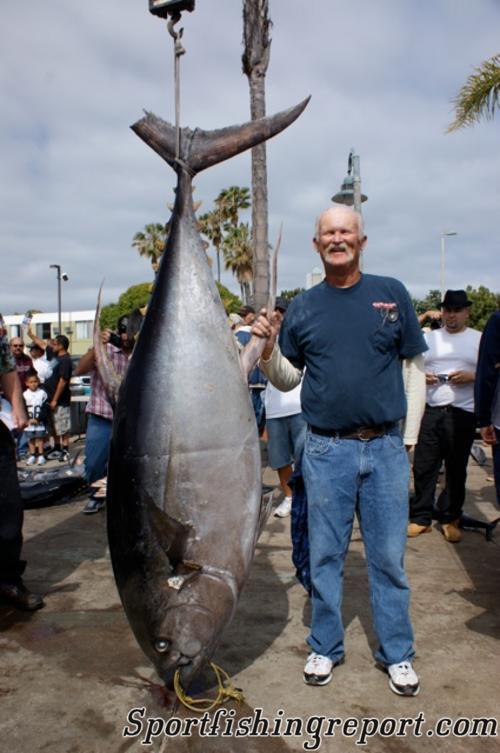
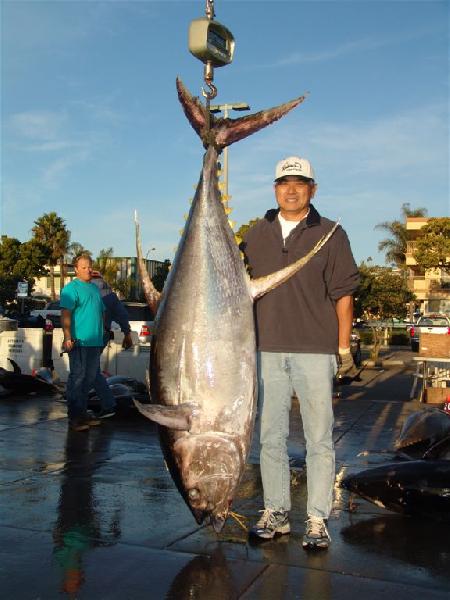
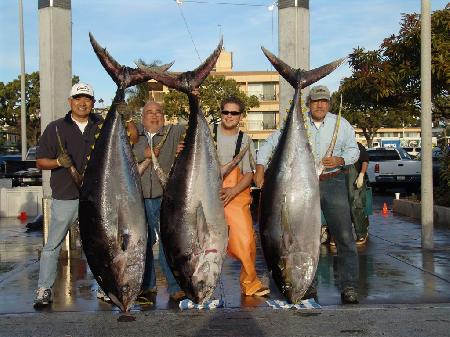
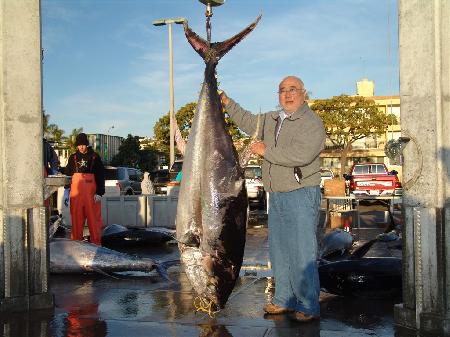
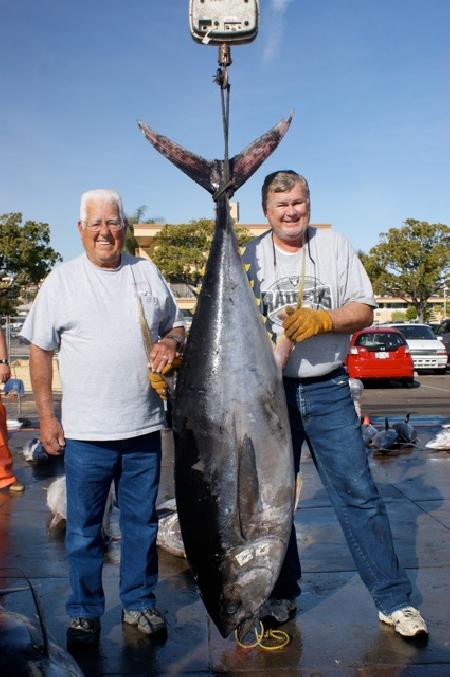
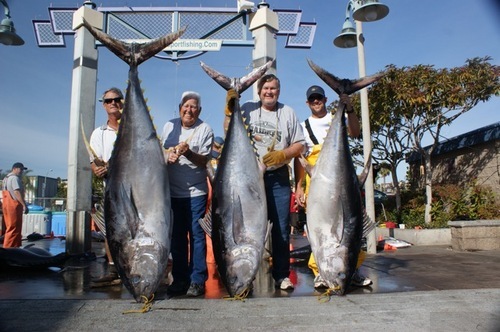
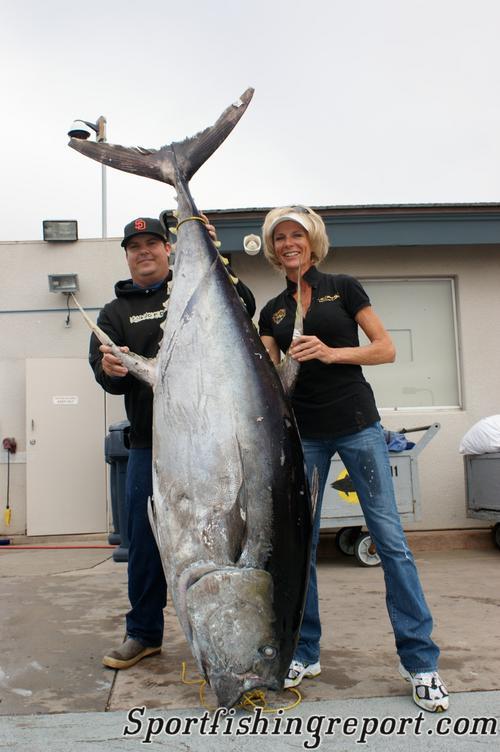
Size & Weight: Typical sport catch 20–100 lbs. Exceptional "Cow" Yellowfin exceed 200 lbs. World record: 427 lbs from Cabo San Lucas. Hawaiian Yellowfin (Ahi) regularly run 100–200+ lbs. Gulf of Mexico Yellowfin average 30–80 lbs.
Best Lures: Large skirted trolling lures (8–12 inch) in blue-black, pink-white, or natural color produce consistent trolling strikes. Casting heavy surface iron jigs (Tady 45, Salas 6X) into surface schools produces explosive strikes — the pinnacle of West Coast offshore fishing. Stick baits and large poppers work when fish are busting bait on the surface. High-speed trolling spreader bars mimic schools of baitfish effectively. Cedar plugs and Hex heads at 7–9 knots cover water effectively.
Best Baits: Live mackerel, skipjack, and sardines are the top live baits in the Pacific — "fly-lining" (no weight, circle hook) a live bait behind a slow-moving boat into a feeding school produces the most fish. Chunks of fresh-cut squid work everywhere Yellowfin are found. Fresh whole squid rigged on a trolling lure is outstanding. Balloon fishing a live bait at the surface produces spectacular strikes from large fish. In the Atlantic and Gulf, live pogies (menhaden), blue runners, and mullet are top baits.
All tropical and subtropical oceans worldwide. In the Pacific, one of the dominant offshore gamefish from Southern California to Panama, throughout Hawaii, and across the Central and Western Pacific. Atlantic Yellowfin are abundant from New England through the Gulf of Mexico, Caribbean, and along the entire coasts of Central and South America.
Water Conditions
4 of 9
65°F–82°F. Concentrate at warm-water temperature breaks, color changes, and offshore structures like seamounts, banks, and floating debris. Often found associated with dolphin schools (porpoise) in the Eastern Pacific.
Tackle & Bait
5 of 9
Best Lures:
Large skirted trolling lures (8–12 inch) in blue-black, pink-white, or natural color produce consistent trolling strikes. Casting heavy surface iron jigs (Tady 45, Salas 6X) into surface schools produces explosive strikes — the pinnacle of West Coast offshore fishing. Stick baits and large poppers work when fish are busting bait on the surface. High-speed trolling spreader bars mimic schools of baitfish effectively. Cedar plugs and Hex heads at 7–9 knots cover water effectively.
Best Baits:
Live mackerel, skipjack, and sardines are the top live baits in the Pacific — "fly-lining" (no weight, circle hook) a live bait behind a slow-moving boat into a feeding school produces the most fish. Chunks of fresh-cut squid work everywhere Yellowfin are found. Fresh whole squid rigged on a trolling lure is outstanding. Balloon fishing a live bait at the surface produces spectacular strikes from large fish. In the Atlantic and Gulf, live pogies (menhaden), blue runners, and mullet are top baits.
Top Fishing Locations
6 of 9
Filter by State:
3 fishing locations where you can catch Yellowfin Tuna
Bahia Magdalena
🌊 Saltwater
Hawaii
🌊 Saltwater
HI
La Paz
🌊 Saltwater
La Paz, MX
Size & Sport
7 of 9
Typical sport catch 20–100 lbs. Exceptional "Cow" Yellowfin exceed 200 lbs. World record: 427 lbs from Cabo San Lucas. Hawaiian Yellowfin (Ahi) regularly run 100–200+ lbs. Gulf of Mexico Yellowfin average 30–80 lbs.