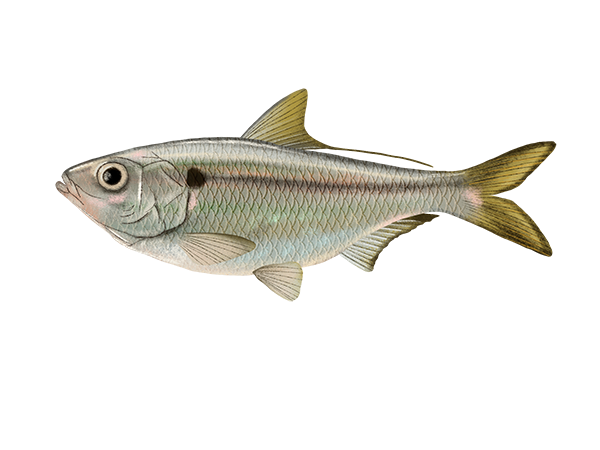
Body Type & Identification: Very small, silvery with a distinctive thread-like extension on the dorsal fin. Yellow fins and a small dark spot behind the gill cover. The most important forage fish in southern US reservoirs — the primary prey of Largemouth Bass, Striped Bass, Crappie, and countless other sport fish. Not a sport fish but the foundation of warm-water reservoir fisheries.
Preferred Water Temperature: 70°F–85°F. A warm-water species that is extremely temperature sensitive — mass die-offs occur when water drops below 45°F. This limits their range to the southern US. Schools in enormous numbers in the open water of warm reservoirs.
Habitat: Open water of warm lakes and reservoirs throughout the southern US — Mississippi drainage south and west, and Pacific Coast drainages where introduced. Forms massive schools that support entire sport fisheries. The keystone prey species of warm-water reservoir ecosystems.
Best Lures: Not a sport target — the primary value is as live bait.
Best Baits: Cast nets are used to collect Threadfin Shad for use as live bait — an essential technique for southern bass and striper fishing. Fresh-dead Threadfin Shad work very well as cut bait on bottom rigs for Catfish and Striped Bass.
Top 5 Destinations: Not a sport target — found throughout southern reservoirs as forage.
Very small, silvery with a distinctive thread-like extension on the dorsal fin. Yellow fins and a small dark spot behind the gill cover. The most important forage fish in southern US reservoirs — the primary prey of Largemouth Bass, Striped Bass, Crappie, and countless other sport fish. Not a sport fish but the foundation of warm-water reservoir fisheries.
Habitat
4 of 7
Open water of warm lakes and reservoirs throughout the southern US — Mississippi drainage south and west, and Pacific Coast drainages where introduced. Forms massive schools that support entire sport fisheries. The keystone prey species of warm-water reservoir ecosystems.
Water Conditions
5 of 7
70°F–85°F. A warm-water species that is extremely temperature sensitive — mass die-offs occur when water drops below 45°F. This limits their range to the southern US. Schools in enormous numbers in the open water of warm reservoirs.
Tackle & Bait
6 of 7
Best Lures:
Not a sport target — the primary value is as live bait.
Best Baits:
Cast nets are used to collect Threadfin Shad for use as live bait — an essential technique for southern bass and striper fishing. Fresh-dead Threadfin Shad work very well as cut bait on bottom rigs for Catfish and Striped Bass.
Top Fishing Locations
7 of 7
Filter by State:
60 fishing locations where you can catch Threadfin Shad