Monkeyface Prickleback
Cebidichthys violaceus
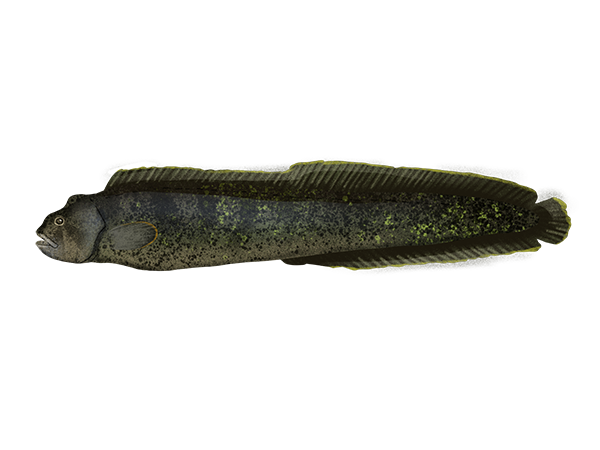
Artwork: © SportfishingReport.com Inc
Overview
Oceans & Range: Eastern Pacific Ocean — from Oregon south to Baja California. Found in the rocky intertidal zone and immediate subtidal in 0–80 feet. Lives in rock crevices, tide pools, and under rocks in the wave zone. A unique California intertidal species — can breathe air and survive out of water for extended periods. Known to early California settlers as "Eel" and used as food.
Preferred Water Temperature: 50°F–62°F. A cold-water intertidal species uniquely adapted to the harsh rocky shoreline environment. Can move across wet rocks between tide pools — often found during low tides by shore anglers and tide pool explorers.
Size & Weight: Typically 12–24 inches and 0.5–2 lbs. Maximum approximately 30 inches and 3 lbs. World record: 4 lbs 4 oz. A distinctive eel-like fish with a distinctive face pattern resembling a monkey — hence the name. Surprisingly good eating despite its unusual appearance.
Best Lures: Rarely taken on artificial lures.
Best Baits: Small pieces of mussels are the top bait — matches their primary natural food. Fresh abalone pieces work if available. Small pieces of crab are effective. Poke poling — inserting a long pole baited with mussels into rock crevices — is the traditional and most effective technique for catching Monkeyface Prickleback.
Identifying
Water Conditions
Tackle & Bait
Size & Sport
State & Agency Records
1 official record on file for Monkeyface Prickleback