Longnose Gar
Lepisosteus osseus
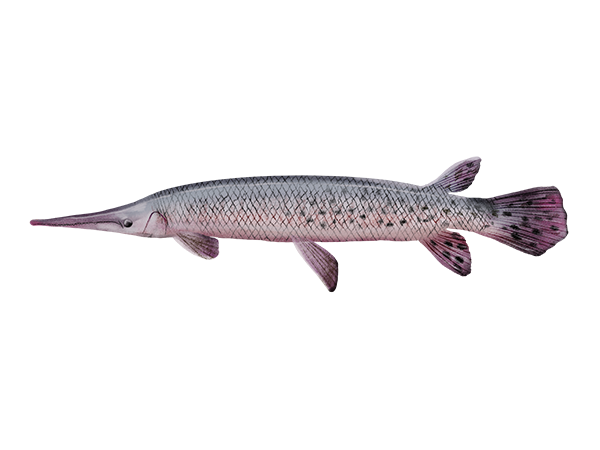
Artwork: © SportfishingReport.com Inc
Overview
Body Type & Identification: The most widespread gar species — identified by an extremely long, narrow snout (the snout width is less than 58% of snout length). Olive to brown with spots on the dorsal, anal, and caudal fins. Can reach 6 feet in larger southern rivers. The most commonly encountered gar species throughout the central US.
Preferred Water Temperature: 65°F–82°F. Found in rivers, lakes, and bayous throughout its range. More tolerant of swift current than other gar species. Surfaces to gulp air — an obligate air breather. Active year-round in the South.
Habitat: The most wide-ranging gar — found from Montana and the Great Lakes south throughout the Mississippi drainage and Gulf Coast. Found in slow rivers, lakes, reservoirs, and backwaters. Frequently seen on the surface near vegetation or logs. Very common in the Mississippi River system.
Best Lures: Rope lures produce consistent results. Topwater lures attract surface strikes. Large inline spinners work near vegetation. Large swimbaits produce strikes from larger fish.
Best Baits: Live shiners are the top bait. Live small sunfish and perch produce results. Dead small fish on a rope lure work well. Cut fish produce strikes from larger gar. Medium to heavy tackle with a wire leader is recommended.
Top 5 Destinations: Mississippi River, Lake of the Ozarks MO, Sam Rayburn Reservoir TX, Tennessee River AL, Atchafalaya Basin LA.
Identifying
Habitat
Water Conditions
Tackle & Bait
Top Locations
State & Agency Records
1 official record on file for Longnose Gar