Kelp Bass
Paralabrax clathratus
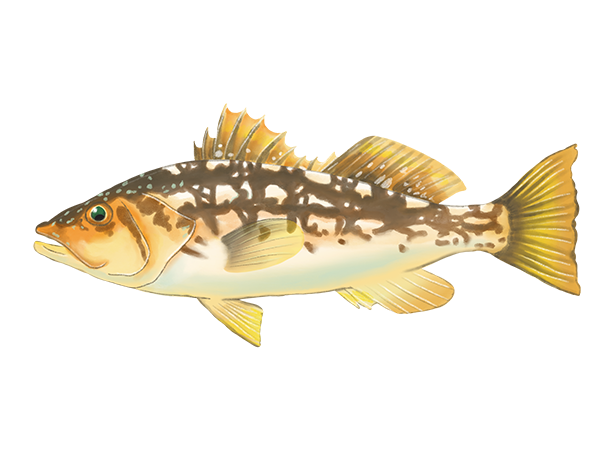
Artwork: © SportfishingReport.com Inc
Overview
Oceans & Range: Eastern Pacific Ocean — from the Columbia River south to Baja California, most abundant from Point Conception south through the Channel Islands and Baja California coast. Found in and around kelp forests, rocky reefs, and nearshore structure in 5–150 feet. California's most popular inshore sport fish.
Preferred Water Temperature: 58°F–70°F. Closely tied to Southern California kelp beds. Territorial fish that hold specific structures year-round. More abundant in summer when water warms slightly.
Size & Weight: Typical catch is 1–3 lbs and 12–16 inches. Trophy fish reach 6–8 lbs. World record: 14 lbs 7 oz. Named for the mottled green and brown pattern that provides camouflage in kelp. A highly popular catch-and-release species.
Best Lures: Swimbaits in sardine and mackerel colors are the top producer — worked slowly through kelp edges. Large soft plastic paddle tails on a swim jig head. Topwater poppers and pencil baits produce explosive surface strikes. Surface iron jigs worked fast. Crankbaits and jerkbaits around structure.
Best Baits: Live anchovies fly-lined near kelp are the classic bait. Live sardines produce results. Live squid are excellent especially at night. Fresh-dead anchovies on a sliding sinker rig produce from the bottom near structure.
Identifying
Habitat
They prefer to inhabit shallow waters with depths ranging from 10 to 60 feet, and they are often found near underwater structures such as kelp beds, rocky outcroppings, and artificial reefs. These structures provide Calico Bass with shelter, food sources, and a suitable environment for reproduction. They are a territorial species and tend to stick to a specific home range, often returning to the same location year after year.
Water Conditions
58°F–70°F. Closely tied to Southern California kelp beds. Territorial fish that hold specific structures year-round. More abundant in summer when water warms slightly.
Tackle & Bait
Best Lures: Swimbaits in sardine and mackerel colors are the top producer — worked slowly through kelp edges. Large soft plastic paddle tails on a swim jig head. Topwater poppers and pencil baits produce explosive surface strikes. Surface iron jigs worked fast. Crankbaits and jerkbaits around structure. Best Baits: Live anchovies fly-lined near kelp are the classic bait. Live sardines produce results. Live squid are excellent especially at night. Fresh-dead anchovies on a sliding sinker rig produce from the bottom near structure.
Top Fishing Locations
1 fishing location where you can catch Kelp Bass
Fly lining anchovies or sardines is a popular technique used by anglers to catch Kelp Bass. The process involves attaching a live or dead baitfish to a hook, without the use of any added weight or terminal tackle. The baitfish is then cast out into the water and allowed to swim naturally, with the hope that a Kelp Bass will strike. Fly lining allows for a more natural presentation of the bait, which can increase the chances of a successful catch. Anglers often choose to use light tackle and a slow retrieve when fly lining for Kelp Bass, in order to maintain the natural movement of the baitfish.
Swimbaits have become an increasingly popular option for targeting Calico Bass in recent years. These realistic soft-plastic lures mimic the appearance and movement of small fish, making them an effective tool for fooling these game fish. When fishing with swimbaits, it's important to use a slow and steady retrieve, allowing the bait to move naturally through the water. Anglers should also pay attention to the weight of the swimbait and adjust it accordingly to match the current conditions. Many anglers also find success with adding scent to their swimbaits to further entice Calico Bass to strike. Overall, fishing with swimbaits can be a fun and effective way to target Calico Bass in a variety of conditions.
Fishing for kelp bass using surface iron is a popular and exciting technique. Surface iron lures are heavy metal jigs that are cast out and retrieved at a fast pace to imitate a fleeing baitfish on the surface of the water. Kelp bass are known to aggressively strike surface iron lures, making for a thrilling and visual experience. Anglers often use a steady retrieve with occasional pauses and jerks to simulate the erratic movements of a baitfish. It is important to use a heavier rod and reel setup to handle the weight of the surface iron and the powerful strikes of kelp bass. This technique is especially effective when fishing around kelp beds or other underwater structures where kelp bass are known to congregate.
Size & Sport
Typical catch is 1–3 lbs and 12–16 inches. Trophy fish reach 6–8 lbs. World record: 14 lbs 7 oz. Named for the mottled green and brown pattern that provides camouflage in kelp. A highly popular catch-and-release species.
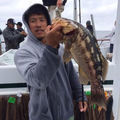
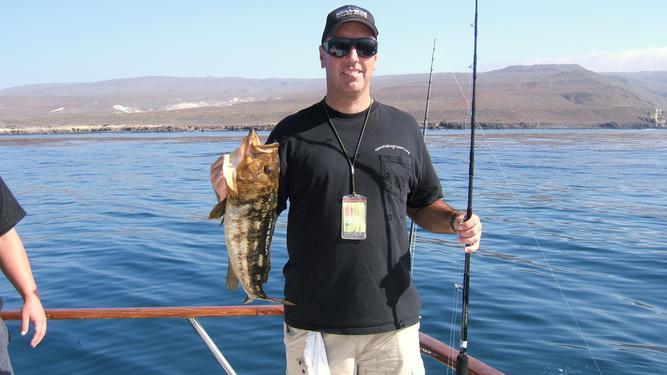
Whoppers — Biggest Catches
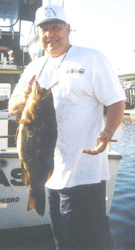
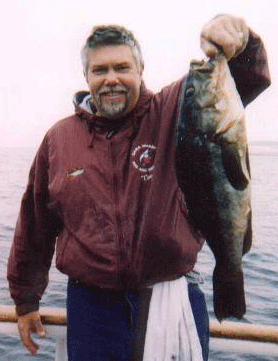


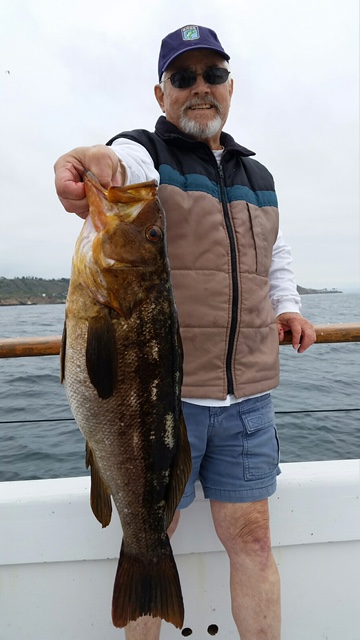


State & Agency Records
1 official record on file for Kelp Bass