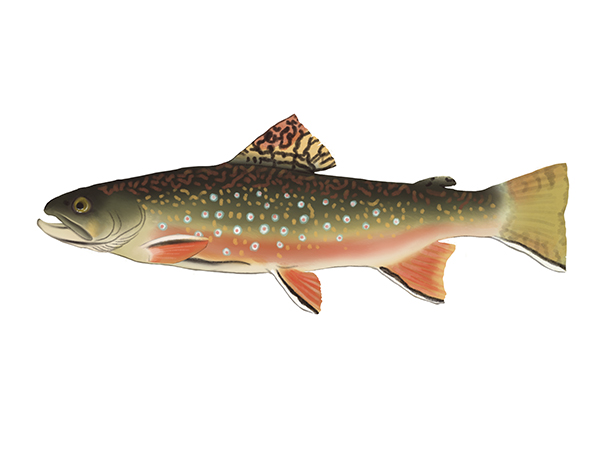
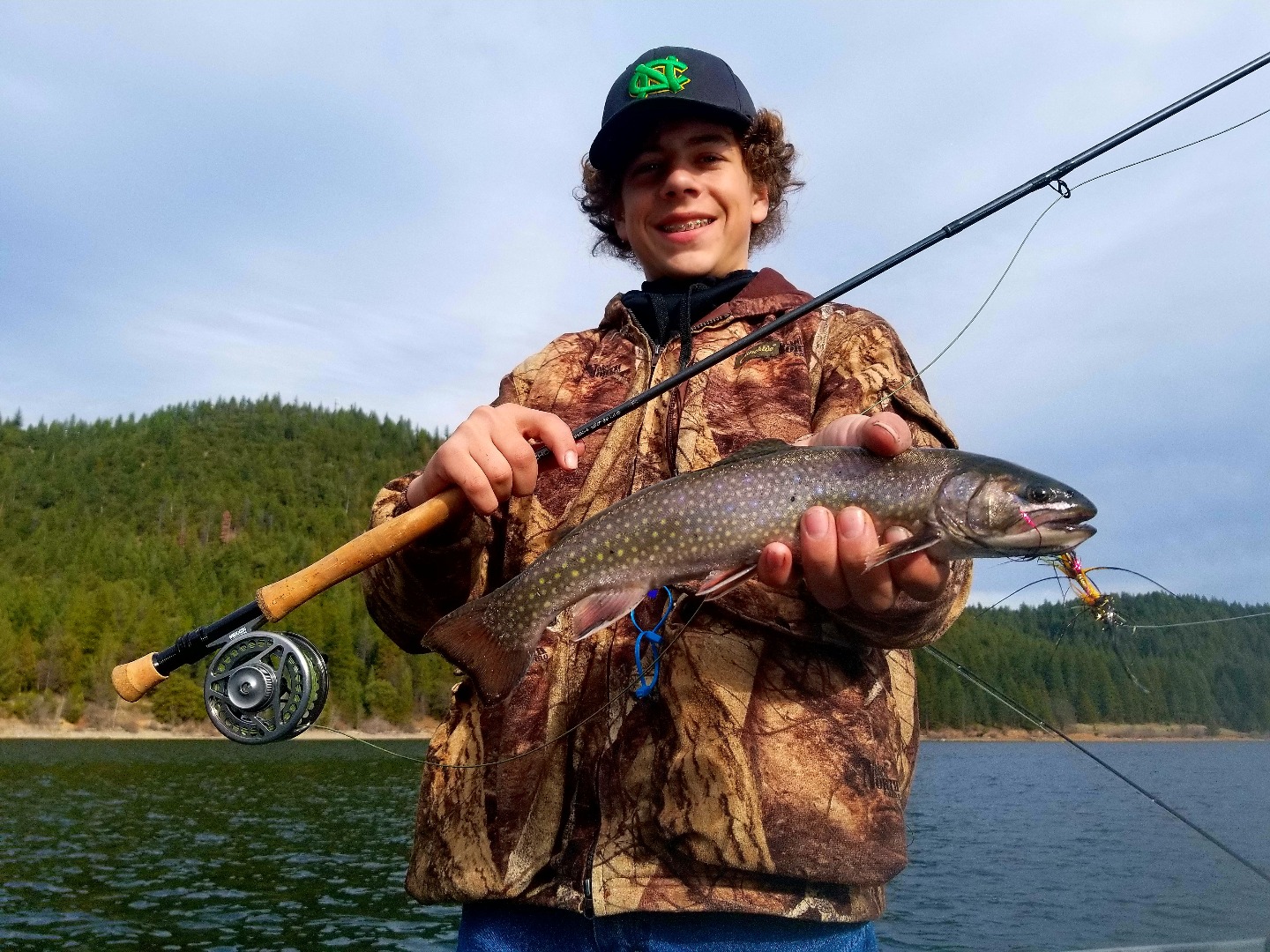
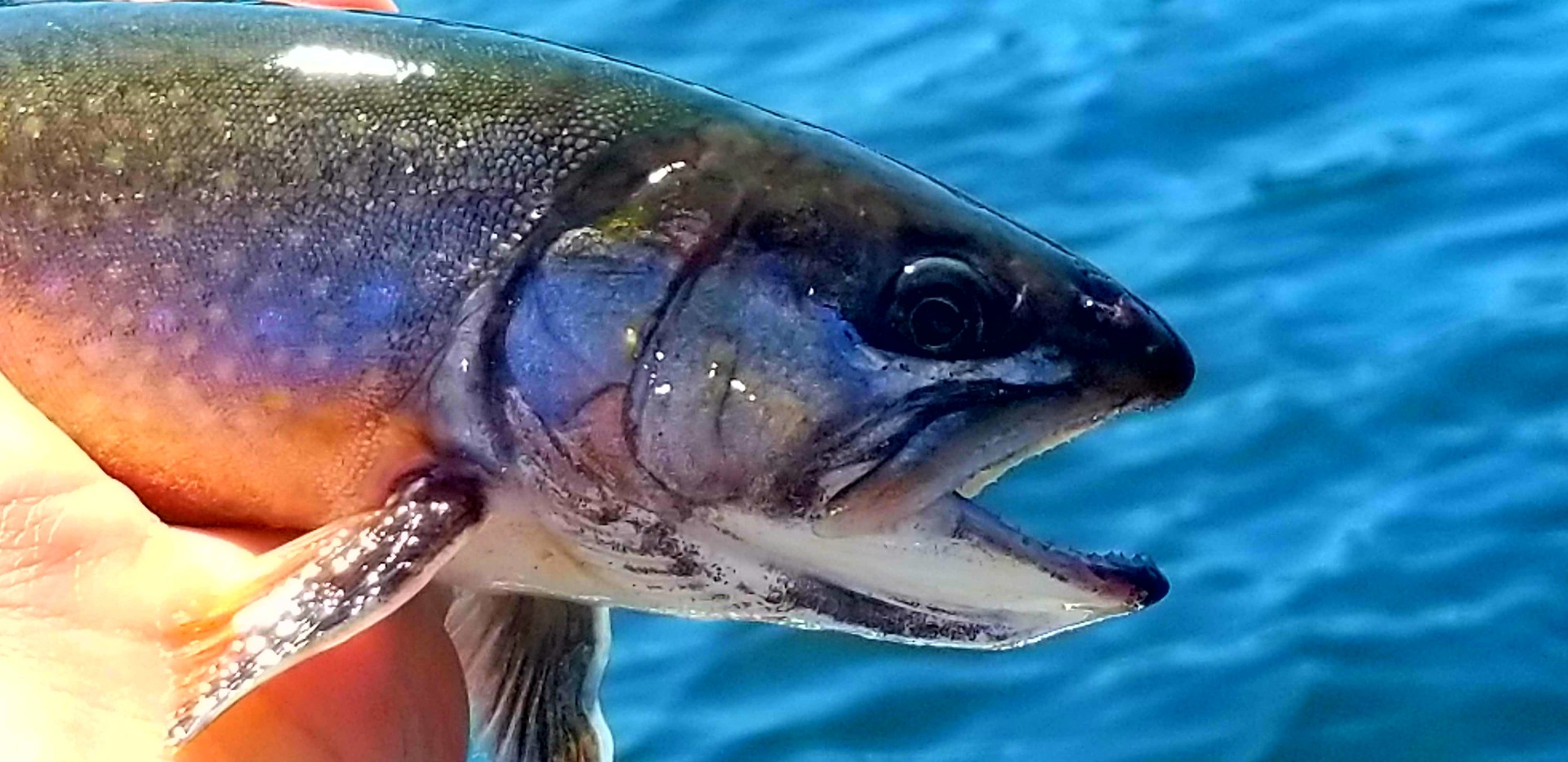
Body Type: Arguably the most beautiful North American freshwater fish. Olive-green back covered with pale worm-like markings (vermiculations). Sides have red spots surrounded by vivid blue halos. The belly and lower fins are orange-red, with the lower fins distinctively edged in white followed by black — a unique pattern found in no other trout species.
Preferred Water Temperature: 45°F–60°F. The most cold-sensitive trout species. Feed most actively at 54°F–58°F. Cannot survive extended periods above 65°F — their presence in a stream is an indicator of pristine water quality.
Habitat: Cold, spring-fed headwater streams, beaver ponds, and glacial lakes with exceptional water clarity and purity. Highly sensitive to pollution, siltation, and warm temperatures. Native to the Appalachians and Eastern Canada; widely stocked in cold Western mountain streams and high Sierra lakes above 8,000 feet.
Best Lures: Small inline spinners (size 0–2) in gold or silver are the top producers. Tiny gold or silver spoons like the Phoebe (1/16 oz) work in small streams. Dry flies and wet flies on a fly rod are the traditional approach — Elk Hair Caddis, Adams, and Royal Wulff are classics. Micro jigs in chartreuse or pink work in clear pools. Small floating Rapalas work in deeper pools and beaver ponds.
Best Baits: Nightcrawlers and small red worms are the universal top bait — keep them small. Single salmon eggs produce in flowing water. Wax worms and mealworms are excellent in cold conditions. Live crickets and grasshoppers work in summer. Small live minnows catch the larger Brook Trout in beaver ponds.
Size & Weight: Stream fish typically 6–10 inches and under 0.5 lbs. Beaver pond and lake fish reach 1–3 lbs. World record: 14 lbs 8 oz from the Nipigon River, Ontario. Sea-run "Salters" reach 4–5 lbs.
Top 5 Places to Catch Brook Trout:
1. Rapid River, Maine — premier wild Brook Trout destination in the US
2. Nipigon River, Ontario — legendary world record heritage water
3. Great Smoky Mountains, North Carolina/Tennessee — native Southern Appalachian fish
4. Rocky Mountain National Park, Colorado — pristine high-altitude alpine lakes
5. Adirondack Mountains, New York — thousands of remote wild Brookie ponds
Arguably the most beautiful North American freshwater fish. Olive-green back covered with pale worm-like markings (vermiculations). Sides have red spots surrounded by vivid blue halos. The belly and lower fins are orange-red, with the lower fins distinctively edged in white followed by black — a unique pattern found in no other trout species.
Habitat
4 of 10
Cold, spring-fed headwater streams, beaver ponds, and glacial lakes with exceptional water clarity and purity. Highly sensitive to pollution, siltation, and warm temperatures. Native to the Appalachians and Eastern Canada; widely stocked in cold Western mountain streams and high Sierra lakes above 8,000 feet.
Water Conditions
5 of 10
45°F–60°F. The most cold-sensitive trout species. Feed most actively at 54°F–58°F. Cannot survive extended periods above 65°F — their presence in a stream is an indicator of pristine water quality.
Tackle & Bait
6 of 10
Best Lures:
Small inline spinners (size 0–2) in gold or silver are the top producers. Tiny gold or silver spoons like the Phoebe (1/16 oz) work in small streams. Dry flies and wet flies on a fly rod are the traditional approach — Elk Hair Caddis, Adams, and Royal Wulff are classics. Micro jigs in chartreuse or pink work in clear pools. Small floating Rapalas work in deeper pools and beaver ponds.
Best Baits:
Nightcrawlers and small red worms are the universal top bait — keep them small. Single salmon eggs produce in flowing water. Wax worms and mealworms are excellent in cold conditions. Live crickets and grasshoppers work in summer. Small live minnows catch the larger Brook Trout in beaver ponds.
Top Fishing Locations
7 of 10
Filter by State:
60 fishing locations where you can catch Brook Trout
1. Rapid River, Maine — premier wild Brook Trout destination in the US
2. Nipigon River, Ontario — legendary world record heritage water
3. Great Smoky Mountains, North Carolina/Tennessee — native Southern Appalachian fish
4. Rocky Mountain National Park, Colorado — pristine high-altitude alpine lakes
5. Adirondack Mountains, New York — thousands of remote wild Brookie ponds
Size & Sport
8 of 10
Stream fish typically 6–10 inches and under 0.5 lbs. Beaver pond and lake fish reach 1–3 lbs. World record: 14 lbs 8 oz from the Nipigon River, Ontario. Sea-run "Salters" reach 4–5 lbs.
Whoppers — Biggest Catches
9 of 10
🥇
20.00 lbs
Trout Meat
Siskiyou Lake, Mount Shatsa, CAJan 11, 2018
🥈
10.00 lbs
Lake Siskiyou
Siskiyou Lake, Mount Shatsa, CAMar 7, 2018
🥉
2.00 lbs
Conner Caldwell
Siskiyou Lake, Mount Shatsa, CAJan 16, 2018
#4
1.00 lbs
Siskiyou Lake, Mount Shatsa, CAMay 4, 2018
State & Agency Records
10 of 10
7 official records on file for Brook Trout
🥇
9 lbs. 12 oz.
Texas Haynes
Silver Lake, June Lake, CASep 9, 1932Freshwater AnglingCDFW
#2
9 lbs. 11 oz.
L: 24.5"
Max Long
Green River Lake, Campbellsville, WyomingJun 21, 1976Freshwater AnglingWYGF
#3
9 lbs. 6 oz.
Burt Westbrook
Deschutes River, Maupin, ORJan 1, 1980Freshwater AnglingODFW