Bluefin Tuna
Thunnus thynnus
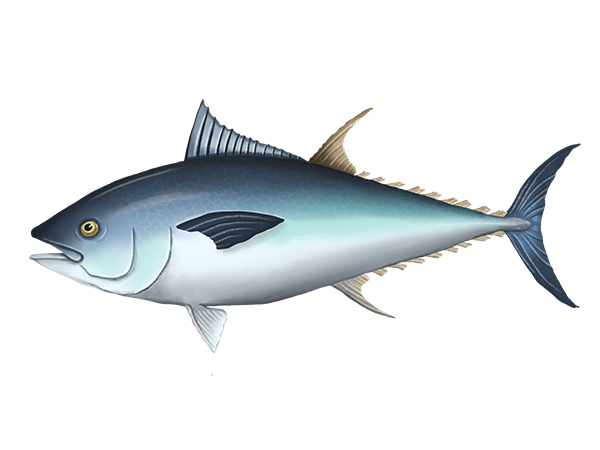
Artwork: © SportfishingReport.com Inc
Overview
Oceans & Range: Pacific Bluefin range from Japan across the North Pacific to the Western coast of North America — primarily Southern California and Baja California. Atlantic Bluefin are found throughout the North Atlantic from Norway to Brazil, with major concentrations off New England, the Gulf of Mexico (spawning), and the Mediterranean (spawning). Both species are highly migratory making trans-oceanic crossings.
Preferred Water Temperature: 60°F–75°F for Pacific Bluefin off California. Atlantic Bluefin range more widely — 50°F–80°F — as the largest and most cold-tolerant tuna. Concentrate near temperature breaks, upwellings, and offshore banks where baitfish aggregate.
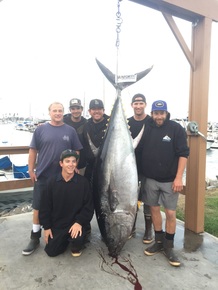
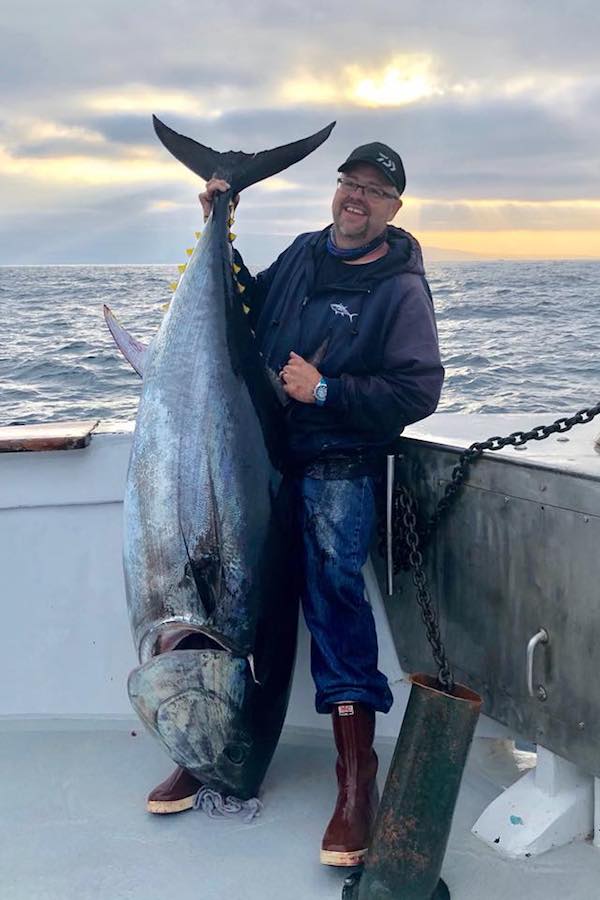
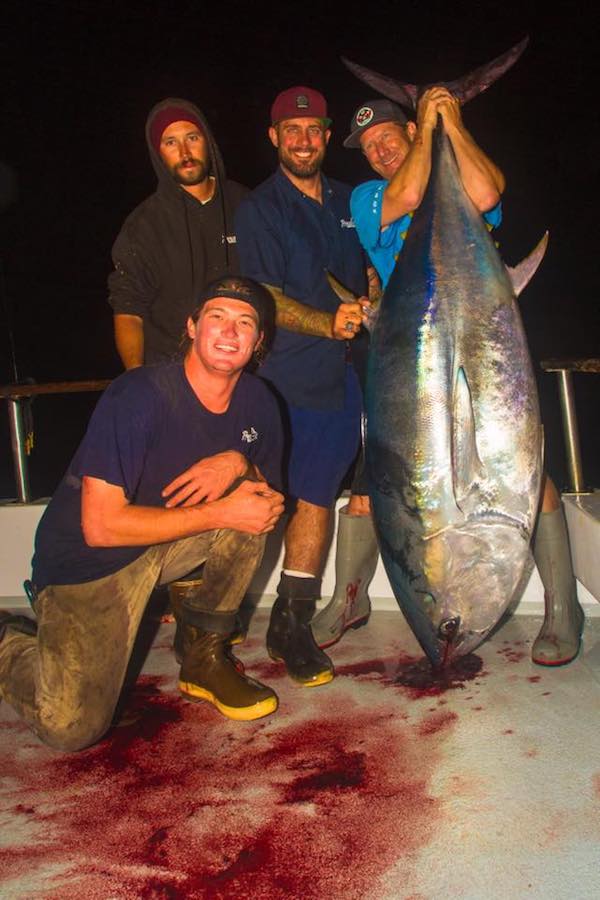
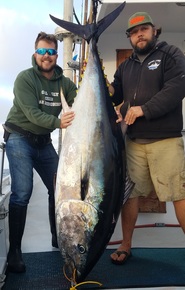
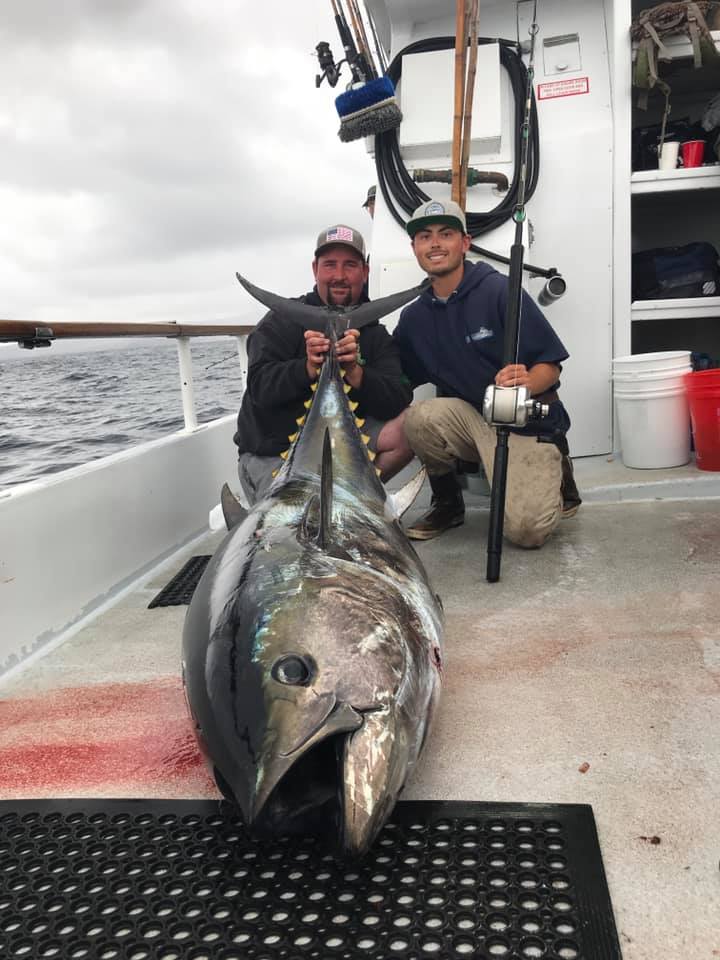
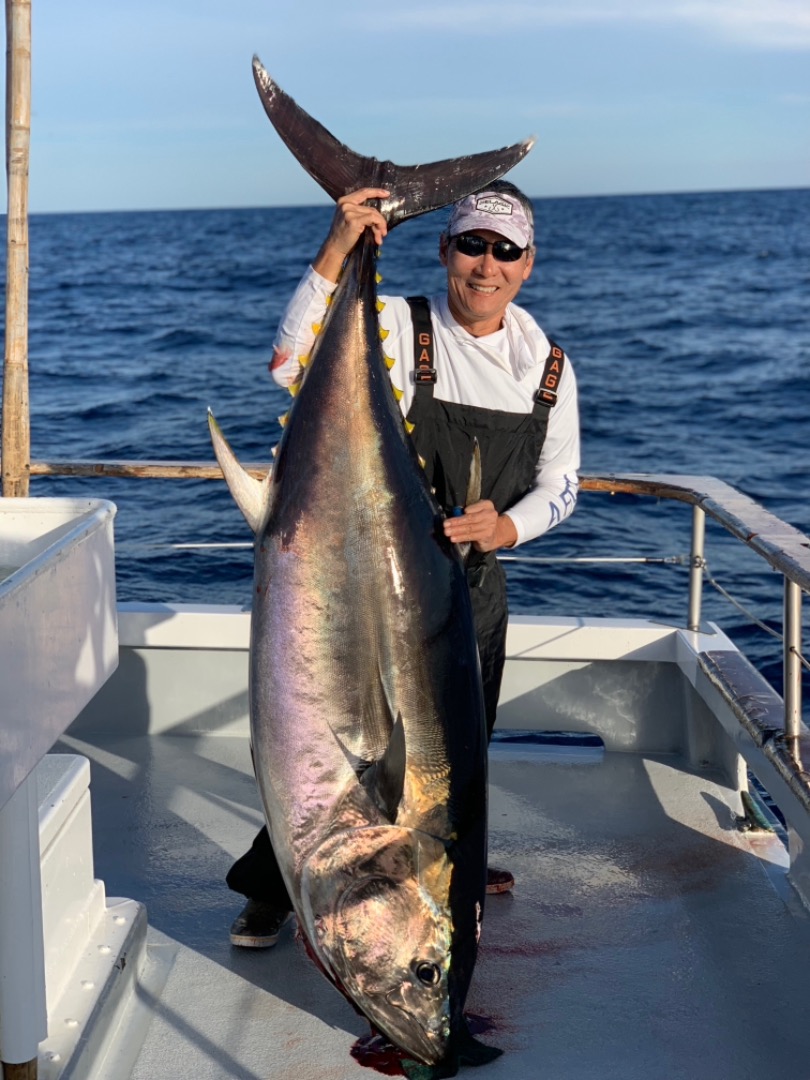
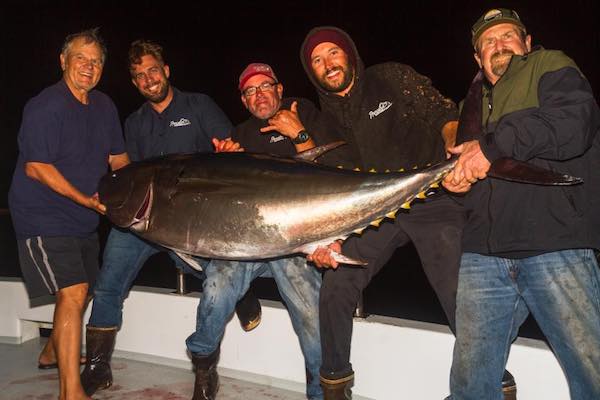
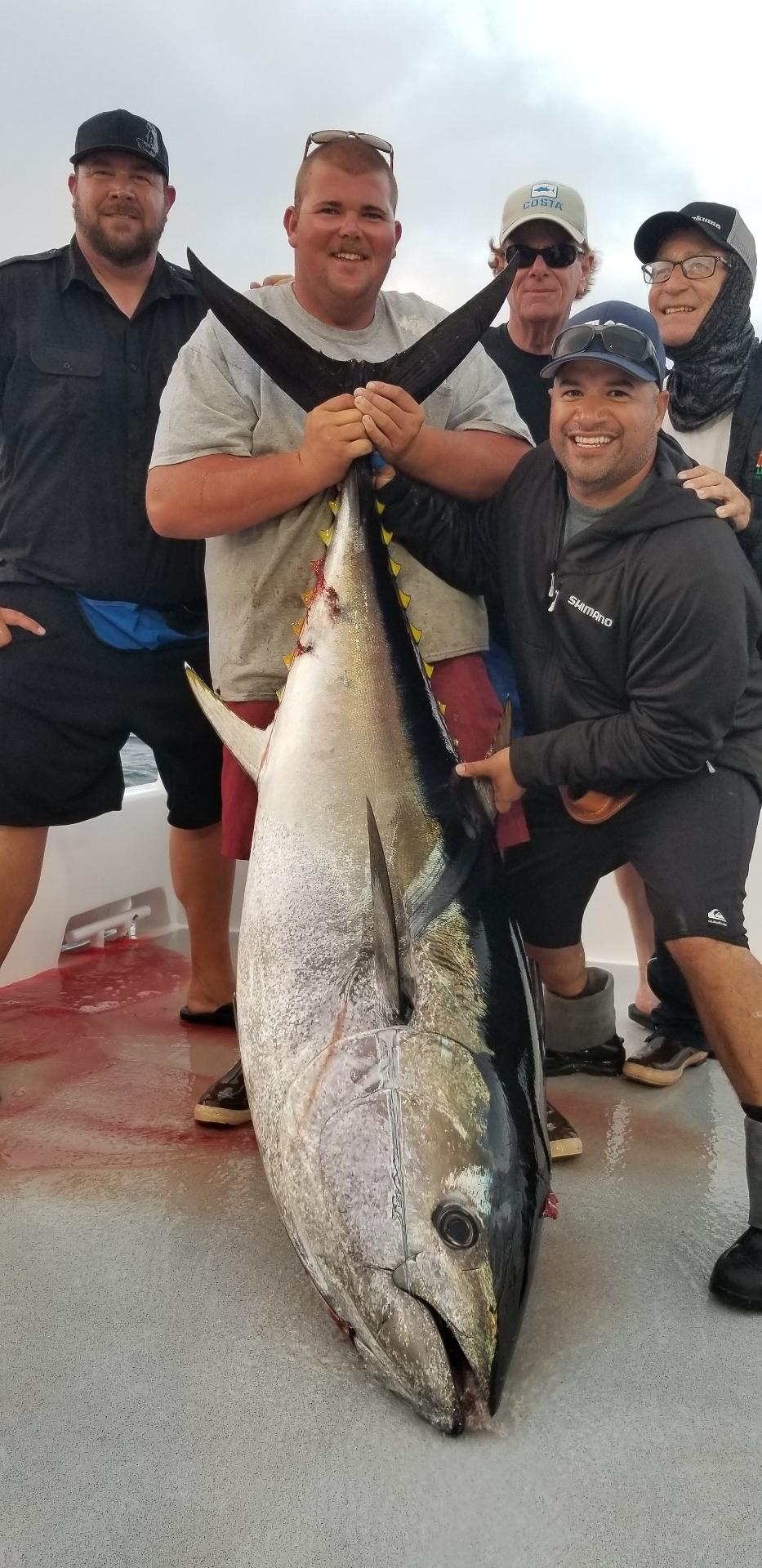
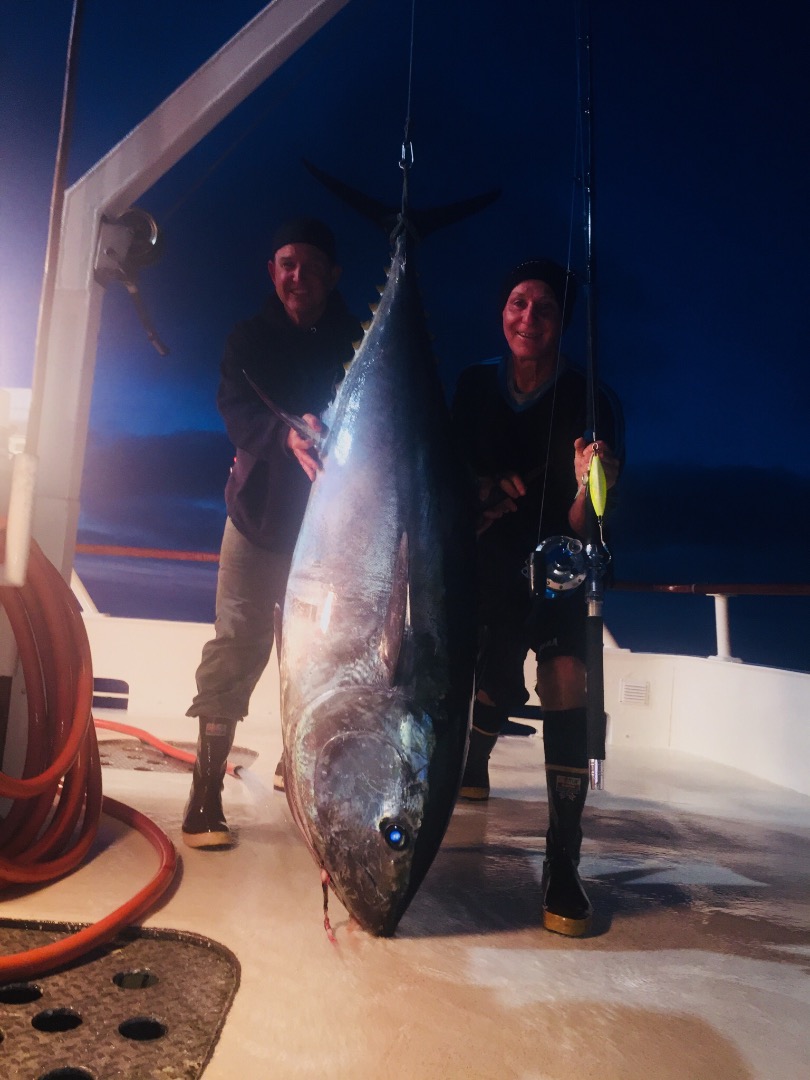
Size & Weight: Pacific Bluefin off California: 50–300 lbs commonly, with exceptional fish to 400+ lbs. Atlantic Bluefin: Giant Bluefin (GBT) class fish regularly exceed 500–1,000 lbs. World record: 1,496 lbs from Nova Scotia. School Bluefin of 40–100 lbs are abundant in the Northeast Atlantic.
Best Lures: For Pacific Bluefin — surface iron jigs (Tady 45, Salas 6X, Yo-Zuri) are the iconic approach — cast into surface boils for explosive strikes. Stick baits and poppers produce when fish are feeding on top. High-speed trolling with flat-line spreaders at 9–12 knots covers water. For Atlantic Bluefin — trolling rigged mackerel and bunker is traditional. Giant soft-head lures produce large school fish. Dead-baiting rigged herring is a UK and European technique.
Best Baits: Pacific Bluefin: Live sardines and mackerel fly-lined or pinned on size 1/0–3/0 circle hooks are the top approach once fish are located. Squid are excellent. Atlantic Bluefin: Chunking with fresh butterfish, herring, or mackerel is the dominant approach off the Northeast coast. Giant live mackerel are used for the largest Giant Bluefin. Fresh whole herring on a kite rig produces trophy New England fish.
Identifying
Habitat
Bluefin Tuna can be found in the Pacific Ocean, primarily in waters off the coast of California and Baja California, Mexico. Their habitat is influenced by water temperature, which can range from 60°F to 75°F in these areas. The tuna tend to congregate around areas with upwellings and oceanic fronts where food is abundant, such as the waters surrounding the Channel Islands off the coast of Southern California. They also migrate long distances across the Pacific Ocean, often crossing the equator to reach their breeding grounds in the western Pacific.
Water Conditions
Tackle & Bait
Top Fishing Locations
6 fishing locations where you can catch Bluefin Tuna
Size & Sport
Whoppers — Biggest Catches











State & Agency Records
2 official records on file for Bluefin Tuna