American Eel
Anguilla rostrata
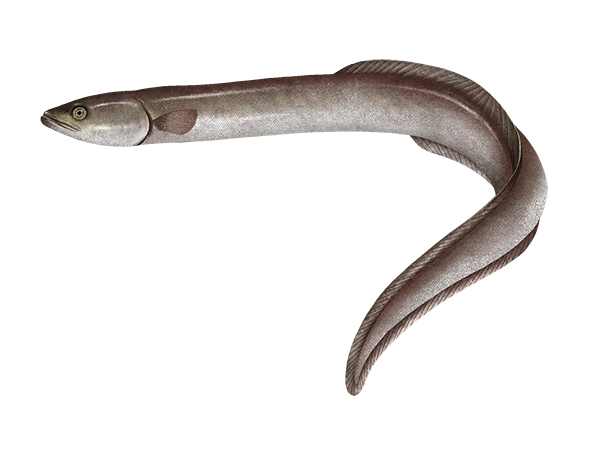
Artwork: © SportfishingReport.com Inc
Overview
Body Type & Identification: Long, snake-like body with smooth, slimy skin, a pointed head, and a continuous dorsal-anal-caudal fin. Olive to yellow-brown with paler belly. The only catadromous fish in North America — born in the Sargasso Sea, migrating to freshwater rivers to grow for 10–25 years before returning to the Sargasso to spawn and die. A true biological marvel.
Preferred Water Temperature: 60°F–75°F. Most active at night in warm months. Nocturnal feeder that hides under rocks, logs, and in burrows during the day. Inactive in winter — burrow into mud and hibernate in cold climates.
Habitat: Rivers, streams, ponds, and lakes of the Atlantic drainage from Labrador to the Gulf of Mexico. Found far inland — American Eels have been recorded hundreds of miles from the ocean. Dam construction has severely reduced inland populations by blocking migration. Common in coastal rivers and estuaries of the Atlantic and Gulf coasts.
Best Lures: Rarely taken on artificial lures. Rubber eels and soft plastic eel imitations produce occasional catches.
Best Baits: Nightcrawlers are the top bait. Fresh cut fish work very well. Live small crayfish are excellent. Fresh chicken livers produce results. Dead shiners and small perch are effective. Bottom rigs in rivers and streams at night near rocks and woody debris produce consistent catches. Populations in decline — check regulations carefully.
Top 5 Destinations: Delaware River, Susquehanna River tributaries (below dams), Chesapeake Bay tributaries MD/VA, Lake Champlain VT/NY, St. Lawrence River NY.
Identifying
Habitat
Water Conditions
Tackle & Bait
Top Locations
State & Agency Records
1 official record on file for American Eel